Projects available at Brainhack Warsaw 2026

Simulating Storytime – Neural Dynamics of Parent–Child Brain Synchrony
Step into the digital sandbox to model parent-child brain synchrony in silico and decode how stories wire us together. Use Python to simulate dual-neural systems and prove why real-world interaction beats a screen every time.
Recognition of cognitive load and resting state in motion using mobile optical tomography (DOT-fNIRS)
Build a real-time fNIRS classification algorithm to distinguish intense cognitive load from relaxation while the body is in motion. Use high-density mobile functional Near-Infrared Spectroscopy to map the struggle between the prefrontal cortex and the Default Mode Network, creating a predictive model for mental fatigue in the real world.

HyPhi: Information-Geometric Hyperscanning for Inter-Brain Alignment
Master discrete Ricci curvature and entropy to quantify how coupling reorganizes during human interaction. Expand an open-source pipeline to move beyond simple connectivity and decode the high-dimensional geometric shifts of the interacting brain.
Rethinking cerebrospinal fluid (CSF) dynamics: a multimodal framework for brain network organization
Join the mission to build a cross-species Bayesian pipeline that integrates fMRI, blood flow, and systemic physiology. You will decode the brain’s waste-management system and reveal how fluid dynamics—from rats to humans—shape the very topology of neural networks.
How Fast Can the Brain Adapt? - Measuring Rapid Neuroplasticity with Eye Tracking and EEG using Python
Can seventy-two hours of targeted eye training rewire your circuitry? Run the full experimental pipeline—from data acquisition to Python-based analytics—to track oculomotor mastery and neural adaptation through EEG. Stop reading about plasticity and start measuring it.
Genomic background effects in psychiatric disorders
Why do some people carry “bad” genes but never get sick? Engineer a computational pipeline using ClinVar and Open Targets to map how genomic backgrounds dictate psychiatric risk and match complex variant profiles with precision drug therapies.
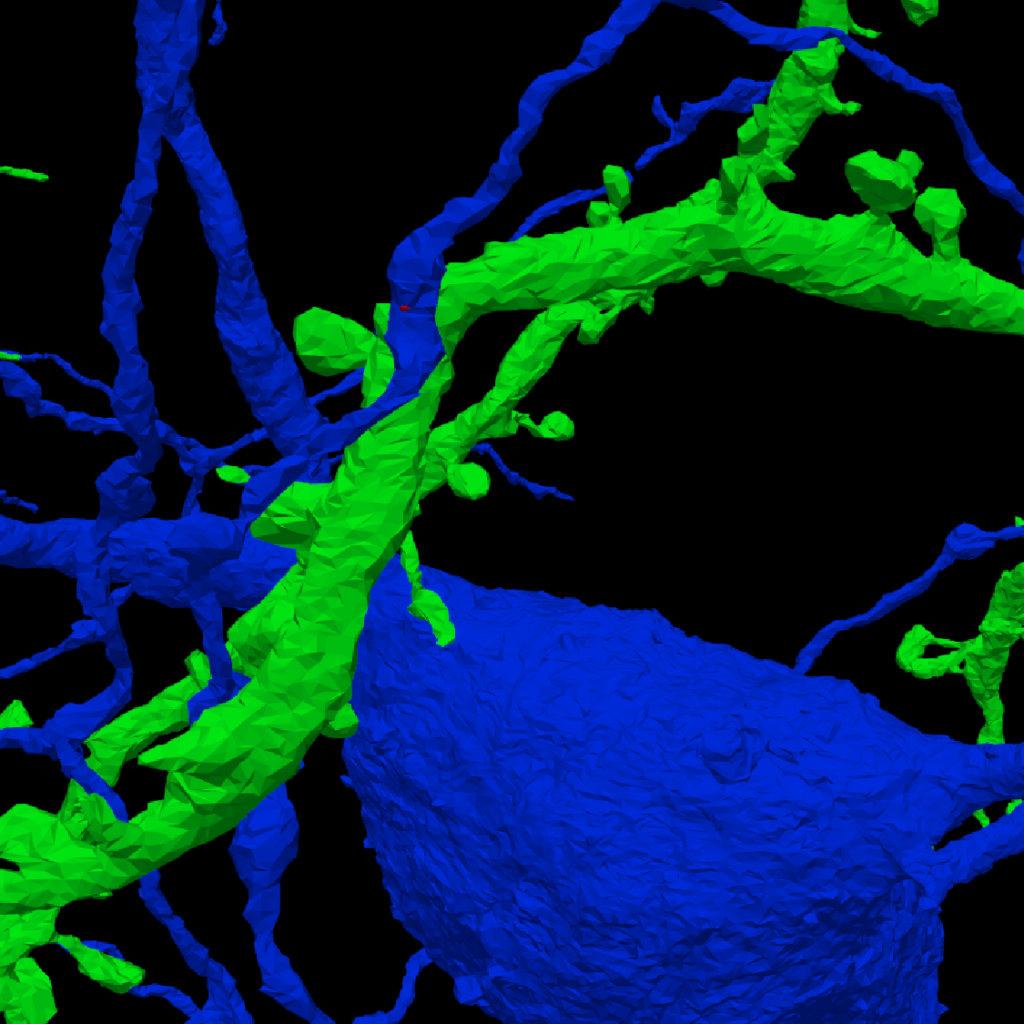
A local interface for the exploration and analysis of large connectomics datasets
Brain mapping is drowning in fragmented, peta-scale data. Join the team building a unified Python interface to tame the CAVE infrastructure. Master 3D mesh handling and cloud-volume workflows to consolidate global repositories into a single, powerful research gateway.

Embedding the Mind: Mapping Psychological Constructs from Language
Turn raw text into high-dimensional semantic gradients using the Supervised Semantic Differential (SSD). Map how concepts like “self,” “time,” or “AI” shift across psychological traits – programming skills are not required
A Digital Tool for Tracking Neuropsychiatric Symptoms in Patients with Systemic Autoimmune Diseases
Prototype an end-to-end interface to correlate neuropsychiatric flares with biological cycles and hormonal shifts. You will adapt validated clinical scales into a seamless, privacy-focused mobile tool to transform the characterization of SLE and SSc symptoms.
Time-Resolved Decoding of Perspective and Subjective Pain in EEG
Can we decode empathy from brainwaves? Using MNE-Python and Scikit-learn, we apply multivariate pattern analysis (MVPA) to EEG data to differentiate “Self” vs. “Other” pain perspectives. Join us to build predictive models that map distributed neural activity to subjective emotional experience in real-time
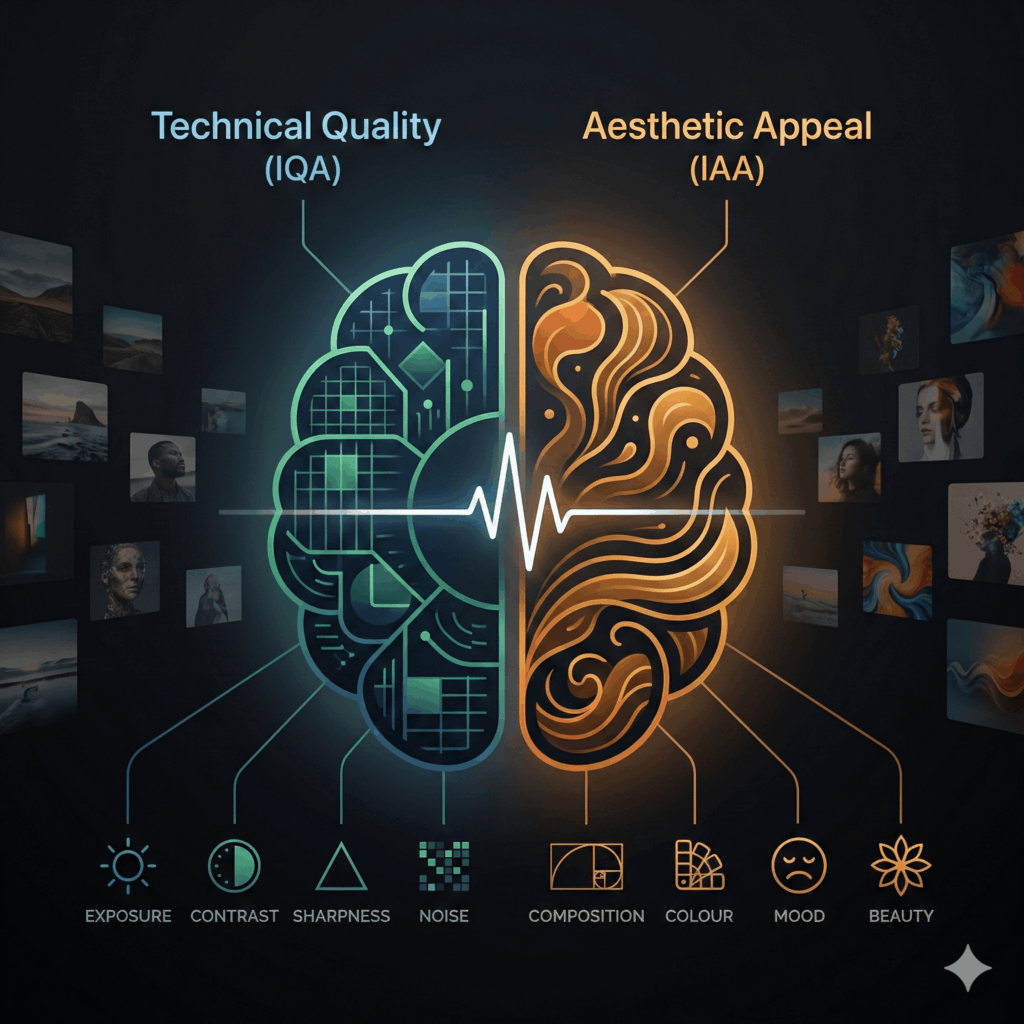
Predicting Image Quality and Aesthetics from EEG
Can a computer judge beauty the way the human brain does? This project explores the relationship between EEG signals and both image quality and aesthetic appeal, linking neural responses to computational metrics of technical quality and beauty. Using correlations, predictive models, and neural signature analysis, we investigate how the brain encodes these two perceptual aspects.
An open‑source interface for preprocessing, anonymizing, and securing multi‑source training data for humanoid robots
The bottleneck in Robotics isn’t compute—it’s private data. Build CogniCap Studio: an open-source interface to anonymize multimodal humanoid training footage. Using MediaPipe and Meta’s SAM2, you’ll build the “secure export” layer that turns raw, sensitive video into ethical, robot-ready sensorimotor datasets.
Brainrot vs Brain
Hook into forehead sensors to finally prove what high-speed digital chaos is doing to our physiology. Build a real-time pipeline to decode the “brainrot” effect and turn viral stimulation into hard, cold data
Bios
BioOS is a closed-loop subcutaneous biosensor system mapping real-time biomarkers to your unique genome. We’re building the AI infrastructure for longevity—moving from reactive healthcare to proactive biological editing and safe, real-time anti-aging interventions.